
Common Website Design Mistakes That Cost You Customers | UGD Solution
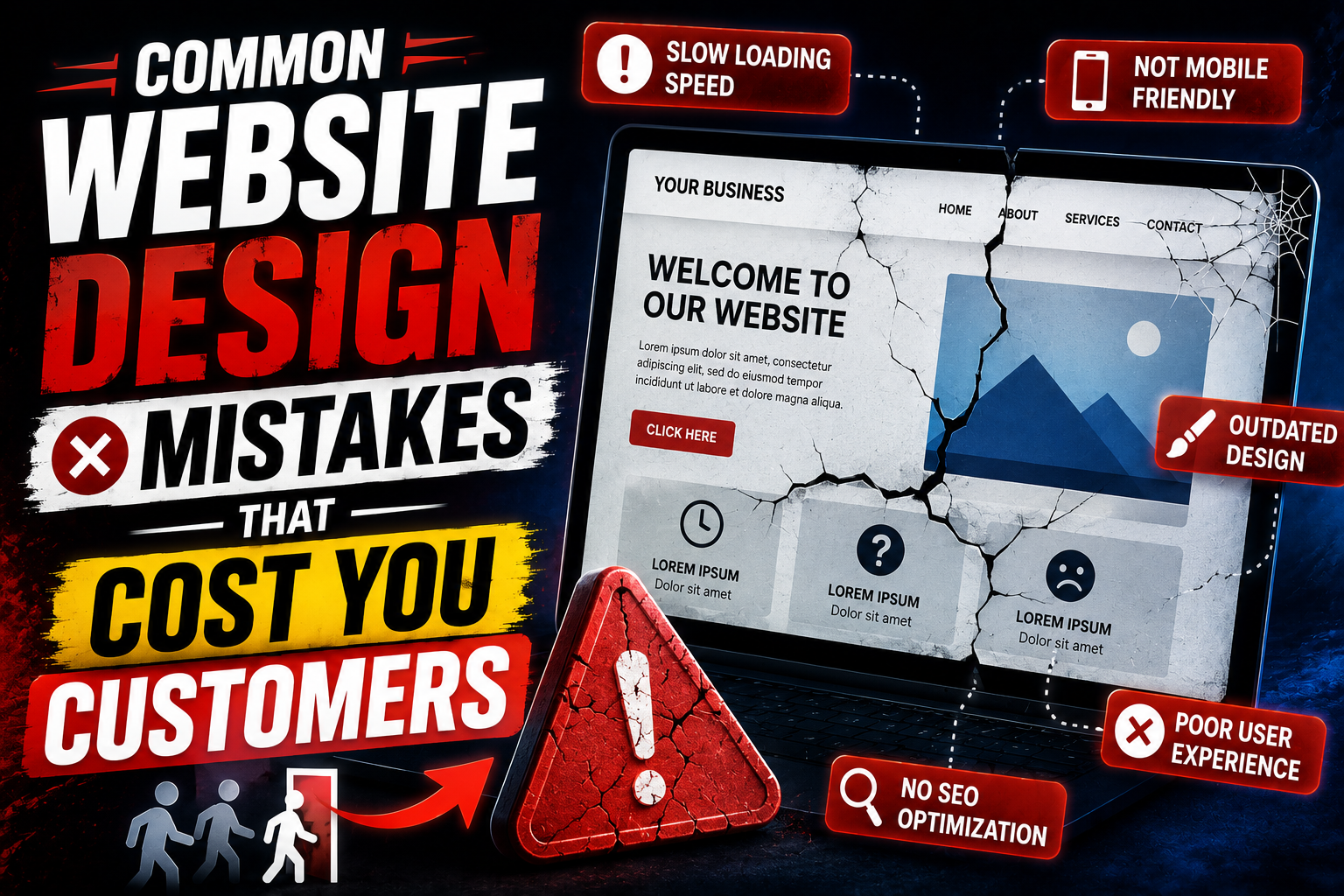
Introduction Your website is often the first impression people have of your business. In today's digital world, visitors decide within a few seconds whether they want to stay on your website or leave. A poorly designed website doesn't just look unprofessional—it can directly impact your sales, lead generation, search engine rankings, and brand reputation. Many businesses invest heavily in marketing but lose potential customers because their website is slow, outdated, difficult to navigate, or not optimized for mobile devices. Even a small design mistake can cause visitors to lose trust and choose a competitor instead. In this blog, we'll explore the most common website design mistakes that cost businesses valuable customers. You'll also learn practical solutions to improve user experience, increase conversions, and build a website that works as your best salesperson. Sign #1 – Your Website Looks Outdated An outdated website immediately creates a negative impression. Customers naturally associate the quality of your website with the quality of your products or services. If your website appears old, cluttered, or difficult to use, visitors may assume your business is no longer active or trustworthy. Common Signs of an Outdated Website Old-fashioned layouts Low-quality or blurry images Inconsistent fonts and colors Broken pages or links Flash animations or outdated plugins Poor navigation structure No clear Call-to-Action (CTA) Why It Hurts Your Business Modern users expect websites to be visually appealing, easy to navigate, and professionally designed. An outdated website can: Reduce customer trust Increase bounce rate Lower conversion rates Damage your brand image Affect SEO performance How to Fix It Refresh your website design every 2–3 years. Use a clean, modern layout. Keep branding consistent. Add professional images and graphics. Make navigation simple. Display trust signals like reviews, certifications, and client logos. Sign #2 – Slow Loading Speed Website speed is one of the biggest factors affecting customer experience. Visitors don't like waiting. If your website takes too long to load, most users will leave before seeing your products or services. Common Causes of Slow Websites Large image files Poor web hosting Too many plugins Unoptimized code No caching Heavy animations Unnecessary JavaScript Why Speed Matters A slow website impacts: User experience Search rankings Sales Customer satisfaction Google also considers page speed as an important ranking factor. How to Improve Loading Speed Compress images before uploading. Enable browser caching. Use a Content Delivery Network (CDN). Choose fast and reliable hosting. Minify CSS, JavaScript, and HTML. Remove unnecessary plugins. Optimize your database. Even reducing loading time by one or two seconds can significantly improve conversions. Sign #3 – Your Website Isn't Mobile Friendly More than half of all website traffic now comes from smartphones. If users have to zoom in, scroll sideways, or struggle to click buttons, they'll likely leave your website and visit a competitor instead. Common Mobile Issues Small text that's hard to read Buttons placed too close together Images that don't resize properly Slow loading on mobile networks Poor navigation menus Solution Use responsive website design. Test your website on different screen sizes. Optimize images for mobile devices. Make buttons easy to tap. Improve mobile loading speed. Sign #4 – Poor User Experience (UX) Even an attractive website can fail if visitors can't easily find what they're looking for. Signs of Poor UX Confusing navigation Too many pop-ups Difficult forms Poor readability Inconsistent design Improve User Experience By Keeping navigation simple Using clear headings Reducing distractions Making forms shorter Adding clear CTAs throughout the website Remember: A website should guide visitors—not confuse them. Sign #5 – No SEO Optimization A beautiful website is useless if nobody can find it. Without Search Engine Optimization (SEO), your website may never appear in Google search results. Common SEO Mistakes Missing page titles No meta descriptions Poor keyword usage Duplicate content Missing image alt tags Slow page speed No internal linking SEO Best Practices Research relevant keywords. Write helpful content. Optimize page titles and descriptions. Use heading tags properly. Build internal links. Improve website speed. Publish blogs regularly. SEO is a long-term investment that consistently brings qualified visitors to your website. Statistics That Show Why Website Design Matters Here are some eye-opening statistics: 94% of first impressions are related to website design. Visitors form an opinion about your website in less than one second. Nearly 53% of mobile users leave a website if it takes longer than 3 seconds to load. More than 60% of web traffic comes from mobile devices. Businesses with strong UX can significantly improve conversion rates and customer satisfaction. Real-World Example Imagine two local businesses offering the same service. Business A Modern website Fast loading Mobile responsive Easy navigation Clear contact form Business B Outdated design Slow website Broken links Difficult navigation Most customers will naturally trust and contact Business A—even if both offer similar pricing and quality. Your website influences buying decisions before customers ever speak with you. Key Takeaways ✔ First impressions matter. ✔ A modern website builds trust. ✔ Fast loading speed improves conversions. ✔ Mobile-friendly design is no longer optional. ✔ Great user experience keeps visitors engaged. ✔ SEO helps customers find your business. ✔ Regular website updates keep your business competitive. Frequently Asked Questions (FAQs) 1. How often should I redesign my website? Most businesses should refresh or redesign their website every 2–3 years to stay modern, secure, and aligned with current user expectations. 2. Why is website speed so important? A slow website frustrates visitors, increases bounce rates, hurts SEO rankings, and can lead to lost sales and leads. 3. What is a mobile-friendly website? A mobile-friendly website automatically adjusts to different screen sizes, making it easy to browse on smartphones and tablets. 4. Can a better website improve my Google ranking? Yes. Factors such as fast loading speed, mobile responsiveness, high-quality content, and good user experience all contribute to better SEO performance. 5. How do I know if my website needs improvement? Warning signs include: High bounce rates Slow page speed Low lead generation Poor mobile experience Outdated design Declining search rankings Ready to Turn Your Website into a Customer-Generating Machine? Your website should do more than simply exist—it should actively attract visitors, build trust, and convert them into loyal customers. If your current website is slow, outdated, difficult to navigate, or not optimized for search engines, now is the perfect time to improve it. At UGD Solution, we create modern, responsive, SEO-friendly websites that are built to perform. From sleek designs and faster loading speeds to user-focused experiences and search engine optimization, we help businesses establish a strong online presence that drives real results. What We Offer: Custom Website Design & Development Responsive Mobile-Friendly Websites Website Speed Optimization SEO Optimization UI/UX Design Improvements Website Redesign Services Ongoing Website Maintenance & Support Visit: www.ugdsolution.com Let's build a website that works as hard as you do. Conclusion Your website is one of your most valuable business assets. While marketing campaigns may bring visitors to your site, it's the website experience that determines whether those visitors become customers. Common issues like outdated design, slow loading speed, poor mobile usability, weak user experience, and lack of SEO can quietly reduce conversions and limit your business growth. The good news is that these problems are entirely fixable. By investing in a modern, fast, user-friendly, and search-optimized website, you create a stronger first impression, improve customer trust, and increase your chances of generating more leads and sales. If your website isn't delivering the results you expect, it may be time for a redesign. A well-crafted website isn't just a digital presence—it's a powerful tool for business growth.